
ILOILO CITY: The Venice of the Philippines

Iloilo City is blessed with a wonderful gift – the Iloilo River. This river is the catalyst for the changes in Iloilo especially its marine industry. This river will truly makes Iloilo the beautiful city.

ILOILO CITY: The City of Love

Being a regional Center of Western Visayas, Iloilo's night life is very much active. With the presence of different bars, restaurants and hotels, this city has been delivering one of a kind experienced every night time.

ILOILO CITY: The Queen City of the South

Iloilo City has been making noise in terms of creating pursuing it dreams to become a modern city. High-raised building is now on its way to invade the city, as its tag-line says “My City My Pride”..

ILOILO CITY: The Center of Western Visayas

Welcoming growth and being highly-urbanized city, Iloilo's business growth is fast and becoming enormous. The presence of different intuitions in the city is an indication of being one of the economic centers in the Philippines.

ILOILO CITY: The City with Finest Festival

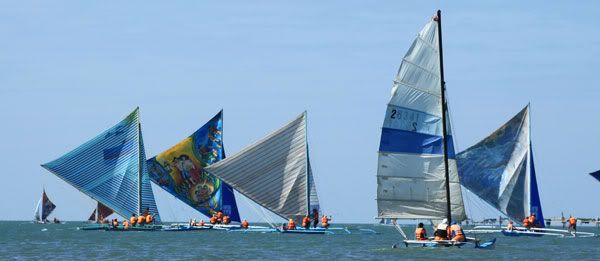
Paraw Regatta is one of Iloilo's finest festivals. Aside from this festivity Iloilo is also well-known for its Dinagyang which dubbed as the best Festival in the Country.

Thursday, May 26, 2011

119 structures to give way to Guimaras-Iloilo Ferry Terminal

By Montesa Griňo-Caoyonan

The 119 illegal structures alongside the abandoned Rotary Park in Brgy. Concepcion, Iloilo City will be demolished next month by the Task Force Anti-Squatting and Illegal Structures to give way to the proposed Guimaras-Iloilo Ferry Terminal Service (GIFTS) project.

Engr. Robert Dumanil, head of Task Force Asis, said many of the dwellers are occupying the area only for livelihood purposes but they are not homeless.

He said they have been occupying a wide portion of the park, which is a government-owned lot – 95 structures are located inside the park while 24 outside.

Dumanil said these illegal structures are mostly in form of kiosks serving as sari-sari store, boarding house, repair shop, and other similar structures.

The illegal occupants are not only from Iloilo City as others are also from Guimaras province, he said.

Dumanil said they have been receiving reports that these illegal occupants are renting the place through the son of a village chief, however, he is not sure if their informants are referring to the son of Brgy. Captain Leah Severina Berciles.

He said they will notify the dwellers about the scheduled demolition and ask them to vacate the area within seven days. After the notification, they will issue a final and executory order to the illegal occupants even without a court order.

“They know already that it’s a public place and a government-owned lot so it’s not our obligation to look for their relocation site,” he said.

GIFTS PROJECT

Iloilo City Mayor Jed Patrick Mabilog said he is still waiting for President Benigno Aquino III to sign the presidential proclamation that will declare an area at Fort San Pedro as the site of the ferry terminal project that will cater to pump boat passengers plying the Iloilo-Guimaras route.

Mabilog said the proclamation will cover almost a hectare of land, including the lot currently occupied by the Philippine Coast Guard Iloilo District Office that plans to renovate their building once the illegal structures are removed.

Aside from the national government, the Asian Development Bank, German International Cooperation, and Cities Development Initiatives for Asia are also expected to fund the project.

MORE DEMOLITIONS SET

Aside from the 119 illegal structures along Rotary Park, the Task Force Asis and Department of Public Works and Highways (DPWH) are also set to demolish 280 illegal structures for road clearing along Diversion Road in Mandurriao district.

Dumanil said they are waiting for a go-signal from the DPWH for the demolition to proceed.

These illegal structures are mostly gutters, cemented gates, signages, tarpaulins, and posts that have been identified as obstructions to access roads.


source :
 http://www.iloilonewstoday.com/index.php?option=com_content&view=article&id=1761:119-structures-to-give-way-to-guimaras-iloilo-ferry-terminal&catid=98:local-news


Wednesday, May 25, 2011

Football Reigns in Barotac Nuevo

BAROTAC NUEVO, Iloilo, Philippines – The exhibition game of the Azkals Tuesday was a clear indication that football reigns in this Iloilo town.
 
“Bisan wala kami inugsulod sa kaldero, basta maka lantaw lang kami football, ok na (Even if we don’t have anything to cook and eat, as long as we can watch football),” declared the stage announcer said halfway through the friendly game of the famed national football team against Central Philippine University (CPU).

The crowd, mainly natives of Barotac Nuevo, particularly cheered the Ilonggo players with the Philippine Azkals.

They were proud to point out that star striker Ian Araneta, co-captain Emilio “Chieffy” Caligdong, Mark Ferrer, Roel Gener, Nestorio Margase, Joebel Bermejo, Yanti Barsales, and Ricardo Becite III are all natives of Barotac Nuevo, which is considered as the football capital of the country.

The open field in front of the San Antonio De Padua Church was witness to a jam-packed crowd of some 7,000 fans that came to support the practice game of the Azkals who are preparing for the country’s first World Cup qualifying match since 1993.

Not even the 19th minute goal of Jovanni Sempron of CPU team dampened their spirits.
They kept cheering for the Azkals and were rewarded when Becite scored an equalizer in the second half. The game ended in a 1-1 draw.

Caligdong has earlier said that as Ilonggo players, they are always putting their best foot forward as they are aware that they are representing the essence of what it means to be products of the country’s football capital.

Caligdong and the rest of the Ilonggo Azkals played on the very same field which they grew up playing in as young boys prior to having the opportunity to represent the national team in several international games, most notably at the Asian Football Confederation (AFC) Challenge Cup.

They now hope to bring more pride to their hometown as the Azklas faces Sri Lanka on a two-leg qualifying match for the World Cup on June 29 and July 3.

The Tuesday exhibition match was made possible by Philippine Football Federation (PFF) president Mariano “Nonong” Araneta Jr. and Iloilo 4th District Rep. Ferjenel G. Biron, both natives of Barotac Nuevo.


source & related stories:

Tuesday, May 24, 2011

Island Hopping at Concepcion, Iloilo

by Regi Adosto (ABS-CBN Iloilo)

The municipality of Concepcion is located on the northeastern part of Panay Island. It is the capital of the sub-province of Northern Iloilo from 1872 to 1899 and comprises the towns of Banate, Barotac Viejo, Ajuy, Sara, San Dionisio, Estancia, Balasan and Carles.


Iloilo has a lot to offer. You must experience island-hopping off Concepcion.

Stroll along the pristine white sand beaches and sandbars stretching about 200 meters. Set foot on a beautiful island called Pan de Azucar where Juan Salgado defeated pirates in two battles in 1604. Pan de Azucar is the biggest island in Barangay Tambaliza and is one of the largest of 16 island chains.

There is a mangrove eco-park in Barangay Tambaliza. It has at least 100 species of mangroves. The vast mangrove plantation can be seen from the highest island's highest peak.

You can find a small piece of paradise at the Sand Bar Beach in Barangay Bulubadiangan.

Passenger pumpboats can be rented for a whole-day of island hopping for Php1,500.

Tourists can contact The Tourism Office of Concepcion, Iloilo at (+63) 928-983-5476 for inquiries and to help with the island hopping itinerary.


How to Get There:

From Manila, you can fly to Iloilo (estimated cost of Php3,000++, round trip, one hour). You can also opt for a bus trip (estimated cost of Php875++ per head, air-conditioned bus and boat fare, 17 hours plus).

The municipality of Concepcion is 2 hours away from Iloilo City. HPQ tourist van or HPQ bus from Tagbak terminal at Jaro, Iloilo City will bring you to Concepcion. 

source & related story(s) box:

Monday, May 23, 2011

The Historical Flavours of Iloilo

Whats there to do in Iloilo? I texted the organizer of our trip a week before the departure date. We'll eat batchoy, he texted back with a smiley face attached at the end of the message. Batchoy? What was so special about batchoy from Iloilo?

When we finally landed in Iloilo, I learned that batchoy was invented here and that this soupy noodle dish is one of the many things the Ilonggos are very proud of.


Iloilo City is the capital of Iloilo, one of four provinces that occupies Panay island in the Visayas region (the others are Antique, Aklan, and Capiz), and is actually independent from its mother province. Because of its strategic location and the presence of an international airport (the fourth busiest in the country) a half hour away, Iloilo City is considered the gateway to the Western Visayas region, which, apart from the aforementioned provinces, also includes Guimaras and Negros Occidental. It is also the country’s second oldest city (the oldest is Cebu City), which makes it one of the earliest regions in the Philippines discovered by Spanish colonizers and where they built their settlements.

This colonization is quite evident in the architecture. As you drive through downtown Iloilo, particularly through Calle Real (now known as JM Basa Street), try and ignore the tacky billboards, garish signs, and thick tangle of black electric wires and you will see beautifully designed old buildings. Unfortunately, many of these buildings have been left to decay or overtaken by commerce and turned into hardware stores or panciterias. You can’t help but wish that these colonial buildings were protected and maintained by the local government. They could follow the example of many major European cities—the facades of these old structures could be preserved, but the insides gutted and developed into charming cafés, quirky shops, or even small boutique hotels. In the 19th century, this row was the liveliest commercial district as it was the site of most of the town’s European and Chinese retailers.

During the city’s economic boom, thanks in large part to the development of the sugar industry in Iloilo and the neighboring Negros island, families turned their properties into farms for sugar production because there was a high demand for the sweet stuff in the world market. The Jaro district of Iloilo became the Philippines’ first “millionaires’ row” because many wealthy sugar barons built their sprawling mansions there. At the height of their affluence, we can imagine the illustrious families of Iloilo like the Lopezes, the Ledesmas, the Villanuevas, the Lizareses, the Montinolas, the Jalandonis, the Javellanas, and the Locsins, lounging in the verandas of their stately homes, playing croquet in the expansive lawn, or holding huge parties in the lavishly decorated salas.

These days, imagine is all a tourist can do. Many of these huge heritage houses have been abandoned because their owners have either migrated to other cities like Manila or Bacolod, or died. Some which have been left to caretakers are open for viewing by appointment or available to be rented for parties and events.

One of the most attractive is the elegant white mansion called Nelly Garden, built in 1928 and once owned by philanthropist and statesman Don Vicente Lopez and his wife Doña Elena Hofileña. Another notable house is the 200-year-old Casa Mariquit, considered one of the oldest existing houses in Iloilo and where the Javellana family once resided (one of the family members, Maria Mariquit Javellana lived there with her husband, the former vice-president of the Philippines, Fernando Lopez, Sr.). Our group managed to enter the brick-based house and surprised the caretakers—they were in the process of cleaning and sprucing it up for tourists. However, they were kind enough to tour us inside, while giving us a history lesson on its former occupants.

But the most stunning of all has to be the grand Lizares Mansion, which was built in 1937. Rumor has it that after the war broke out, family members were killed, and the mansion was used as a garrison by the Japanese. It then remained unoccupied for years till it was turned into a casino by gambling lords in the 1950s. By the 1960s, the mansion was purchased by Dominican friars for the discounted price of P50,000. It was then renovated and it eventually became the Angelicum School. If you visit Iloilo City during the holiday season, be sure to pass by the school at night—every Christmas, the building is beautifully decorated and lit up.

Visita iglesia...

After our drive by rows of rundown colonial-style buildings and abandoned heritage homes, it was time to visit a few old churches—for a change, it was good to observe efforts to preserve and maintain the churches, perhaps because they are always in use as places of worship. The first church in Iloilo was built in the early 1600s by the Jesuits to serve the needs of the military stationed there. As the province was the setting for early “civilization” in the country, the natural progression was for the Spanish colonizers to build churches there. Today, you will find many with stunning Baroque and Gothic designs.

We visited the Jaro Cathedral, which was built in 1864 and is distinct for its collection of life-sized statues of male saints perched on the columns inside. But outside, there is a statue of Our Lady of Candles (her feast day is on February 2) encased in glass and visited daily by devotees. The Madonna and Child is considered “miraculous” because it keeps growing in size, necessitating its transfer and change of glass case every year. The image originally occupied a spot by the altar inside the church; it is said that after a visit and a blessing by Pope Paul VI in 1982, the statue began to grow in size and had to be moved outside. The belfry is another unique feature of this cathedral—it is one of the few in the country that stands apart from the church (in fact, it is located across the street).

There are many other old churches to visit within the city, like San Jose Church (located right in front of Plaza Libertad) and Molo Church (the “feminist” church because of the presence of at least 16 images of female saints). If you dare venture a little road trip, however, we highly recommend the Miag-ao Church. Located some 40 kilometers southwest of Iloilo City, this over-200-year-old structure was declared a national landmark in 1973 and was included in the UNESCO World Heritage list of “Baroque Churches in the Philippines” in 1993. It also holds the distinction of being one of the most photographed churches in the country, thanks to its unique architectural style. The façade has a decorative bas relief described as “native botanical,” featuring papaya and guava trees and a large coconut tree in the center, and flanked by two dissimilar bell towers.


Batchoy, biscocho, and more...

Lest you think these architectural gems are the highlight of a tour of Iloilo City, locals will always take the time to make you taste their food. Ask any Ilonggo what there is to do in their fine city and they will almost certainly answer “Eat!” And at the top of the list is batchoy.

Batchoy is a hearty noodle soup dish that includes pork innards, crushed chicharon (pork rinds), vegetables, shrimp, chicken breast or beef loin, shrimp broth, and chicken stock, and topped with spring onions and chopped fried garlic. The original version used miki noodles, but to meet customers’ demands, other varieties were developed using miswa, bihon, and sotanghon noodles.


There is much debate on who invented the batchoy. Deco’s and Ted’s, two of the most popular batchoy restaurants in Iloilo, both claim to have concocted this filling dish. The original owners, Frederico Guillergan Sr. and Teodorico Lepura, respectively, each started out experimenting with a basic Chinese noodle soup back in the 1930s. They then opened up batchoy stalls in the public market and eventually expanded. One thing is for sure, though: It originated in the district of La Paz, Iloilo; hence its full name of La Paz batchoy indicates that you are eating batchoy, Iloilo-style.

Another source of Iloilo pride is the seafood. Many seafood restaurants line Villa beach and the most popular, no doubt, is Breakthrough. Tourists and locals alike head to this sprawling open-air restaurant, where you can pick out the fish, crab, lobster, or prawns you want cooked your way. Another must-visit restaurant is Tatoy’s Manokan & Seafoods. Their specialty is barbecued whole chicken stuffed with tamarind and lemongrass leaves and, of course, grilled seafood. These seaside eateries are generally very casual and you may even want to eat with your hands.


After three days of sightseeing and eating, the group was ready for some pasalubong shopping. At the top of my list was biscocho, the one thing my dad asked for when I told him I was going to Iloilo. Personally, I didn’t get the thrill of eating a crunchy piece of toasted bread heavily buttered to the point of turning yellow, but the province has made a whole industry out of it. You can find many brands of biscocho in supermarkets and souvenir shops, but we were told the best if from Biscocho Haus, found all over town and practically an institution in Iloilo.


source:
TRAVELIFE MAGAZINE - the Philippines’ leading travel & lifestyle publication.

Saturday, May 21, 2011

Milestone Heritage Site Preservation Urged

By TARA YAP
May 21, 2011, 6:27pm
ILOILO CITY, Iloilo, Philippines — Heritage conservationists strongly urge the city government to scrap a P35-million proposal to turn the old Iloilo office of Ker & Co. into the new city hall’s parking space.

Exclaimed Dr. Kristin G. Treñas, who is president of the Iloilo City Cultural Heritage Conservation Council (ICCHCC), “What an expensive parking lot! Not just in pesos, but in its true value to Ilonggos, which is inestimable!”

Lamented Treñas, “It is like tearing off a whole chapter from our story as a people!”

The 3,063-square meter lot of the oldest British trading company in the country has been eyed by the administration of Mayor Jed Patrick Mabilog as a parking space for the new seven-story city hall which did not incorporate a parking space in its blueprint. Such a facility – a parking space – must be built - to comply with National Building Code requirements.

“A few months ago, the mayor wanted to retain Ker & Co; and now he is resorting to its acquisition,” cultural worker Bernardo Arellano III said, on Mabilog’s apparently flip-flopping decision on the heritage site.

The Mabilog administration countered however that it does not intend to use up all of the 3,063-square meter lot as a parking lot and that the 19th century structure would be preserved and may even be turned into a museum.

However, heritage conservationists are puzzled about the mayor’s plan for the construction of a parking space and a museum all in one lot.

“Although there is a plan to use the heritage building as an extension office and a museum, it is not entirely clear,” added Arellano.

Ker & Co. was established in the city in the middle of the 19th century when the port of Iloilo opened its door to international trade.

source & related story(s):
 http://www.mb.com.ph


Friday, May 20, 2011

‘Sinadya sa Suba’ Kicks Off Today

ILOILO City – For the first time, Iloilo City celebrates Sinadya sa Suba today and tomorrow in tribute to the river that runs across the city.


Sinadya sa Suba is an environmental campaign of the city government for the advancement of the Iloilo River development and rehabilitation.


It is a two-day affair with a food festival along the riverbanks, variety shows, musical bands, and other sports events like Tipon Basura, a mass mobilization for garbage collection along the river, and Waswas Pamunit, an inland fishing competition.


The festival opens today with the food festival, stretching from Promenade La Paz Area to the area of Drilon Bridge at Brgy. Rizal, La Paz and Carpenter Bridge all the way to Treñas Boulevard.


Today is also the grand opening of Night of Music Festival by the River with KAPUSO Night of GMA-Iloilo, accompanied with a performance by Showcase of Sinamba sa Regatta top performers. 


A mass will be offered at 7 a.m. in tribute of the river, followed by a Formal Opening of Ceremony at the Treñas Boulevard near the Carpenter Bridge.l.


By 8:30 a.m., Tipon Basura and Waswas Pamunit will start, and by 9 a.m. Tribu Pan-ay, Tribu Paghida-et and Tribu Pantat will give a special Dinagyang tribute to the river through Pamukaw sa Suba.


The food festival will open again by 3 p.m., along Treñas Boulevard in the vicinity of Carpenter Bridge.

This will be followed by a Final Judgment for Tipon Basura Competition and First Inland Angling Competition and Paralympics by the Bridge with Office of Persons with Disability Affairs by 4 p.m. and the Awarding Ceremony with Cong. Jerry Treñas and Mayor Jed Patrick Mabilog after.


A special performance by Sinamba sa Regatta Grand Champion will be given at the Music Festival Area along with Pasanag sa Suba: Candle Light Floaters/Lanterns by 6 p.m.


By 7:30 p.m. at Treñas Boulevard, local bands and ABS CBN talents will showcase their talents for Sinadya sa Suba.


This project aims to create a heightened environmental awareness among Ilonggos, particularly the riverside communities of Iloilo City on the importance of sustaining a clean river.

source:
=============================================================================
http://www.panaynewsphilippines.com

Thursday, May 19, 2011

Lopez Group to Revive Airline Company


ILOILO CITY, Philippines (PNA) -– The first Filipino-owned private airline company in the country is poised to revive its operation by servicing chartered flights but, this time, it will already be based in Manila.

This was disclosed by Mayor Jed Patrick Mabilog who recently met with the son of Don Oscar Lopez and officials of the Iloilo-Negros Air Express Company (INAEC) where informally he was informed of the development.
Mabilog said that the revival of the operation is very meaningful because it is the first private airline to operate in the country which really came from this city.

Their return to the industry, according to Mabilog, will again “put Iloilo in the historical map being a host to the first airline and that the company is still there.”

“In the next coming months, they will be very aggressive in the marketing of their chartered flights,” he said.

The INAEC had its inaugural flight with its Iloilo to Manila route on February 1, 1933.

The Flight Schedules and Fares

source:
==================================================================================
http://www.mb.com.ph
http://www.skyscrapercity.com